Retreat
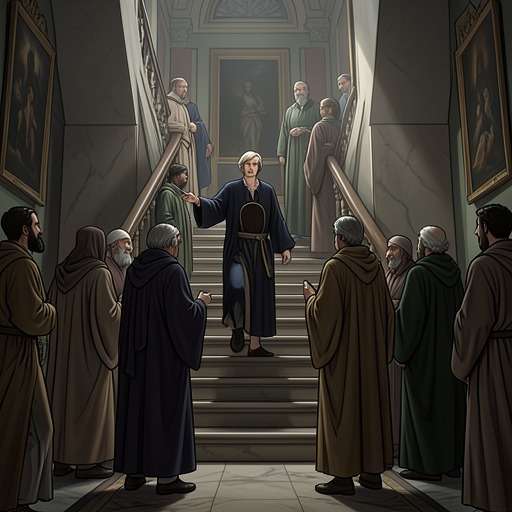
I ChingRetreat, or Thun, describes a time when the growing power of small and unprincipled people makes it necessary for superior men to withdraw. Its decisive teaching is that retreat need not mean panic or surrender: movement may be dangerous, purpose must be held fast, and a noble withdrawal can be advantageous, while firmness and correctness can limit the danger of the time.
Meaning and Political Setting
The commentary identifies Thun with the sixth month. Two weak lines represent the yin influence, which has established a foothold; politically, this image signifies the growth of small and unprincipled men in the state. As their influence increases, superior men are compelled to retreat. The hexagram therefore treats withdrawal not as an isolated personal preference but as a response to a shift in the balance of power.
The political interpretation belongs to a broader account of the Changes as a work of moral, social, and political instruction. Its sixty-four brief essays take their significance from six-line figures, while the associated line texts develop the meaning of each position through symbolic illustrations and indications of good or bad fortune. The statements were composed in the manner of diviners, but, in this account, their function is not merely to predict an individual future: they make the figures vehicles for reasoning about human society and the conduct appropriate to its conditions.
The Hexagram’s Counsel
The judgment says that Retreat indicates successful progress in its circumstances, while firmness and correctness are advantageous only to a small extent. That qualification matters: the time is not represented as wholly auspicious, and upright conduct does not erase the pressure that makes withdrawal necessary. It can, however, arrest some of the threatened evil.
The first line pictures a retiring tail and declares the position perilous: no movement in any direction should be made. The commentary reads the image as a person hurrying away; haste would aggravate, rather than resolve, the danger. Retreat begins, then, not with an energetic escape but with recognition that movement itself can worsen a precarious situation.
The second line changes the emphasis from peril to resolve. Its subject holds fast to the purpose of withdrawing, as though bound by a thong made from the hide of a yellow ox, which cannot be broken. The commentary identifies that purpose specifically as withdrawal. The line is weak in the second place and responds correctly to the strong fifth line; both occupy central positions. The ox’s yellow colour signifies correctness, joining the image of unbreakable restraint to the line’s position and its measured commitment.
At the opposite end of the hexagram, the sixth line presents retreat in its most complete and honourable form: its subject withdraws nobly, and the outcome is advantageous in every respect. The contrast with the first line is exact. A hurried departure compounds danger, while withdrawal conducted in a noble way accords with the demands of the time.
Interpretation and Significance
Retreat’s sequence of images distinguishes among the conditions and manners of withdrawal: the threatened advance of disorder, the danger of hasty movement, the need to hold one’s purpose firmly, and the possibility of leaving with dignity. Its advice is neither to confront every advance nor to treat retreat as inherently virtuous. The correct action depends on circumstances, and even firm correctness is said to restrain the evil only to a limited extent.
This political reading also illustrates how the book’s symbolic language can carry judgments beyond the mechanics of divination. A hexagram’s figure supplies an image; its judgment and line texts turn that image into guidance about conduct under changing conditions. In Retreat, the central ethical distinction is not simply between staying and leaving, but between a panicked flight that worsens danger and a deliberate withdrawal that preserves purpose and dignity.